How Blue Collar Robotics delivers measurable proof through structured pilots
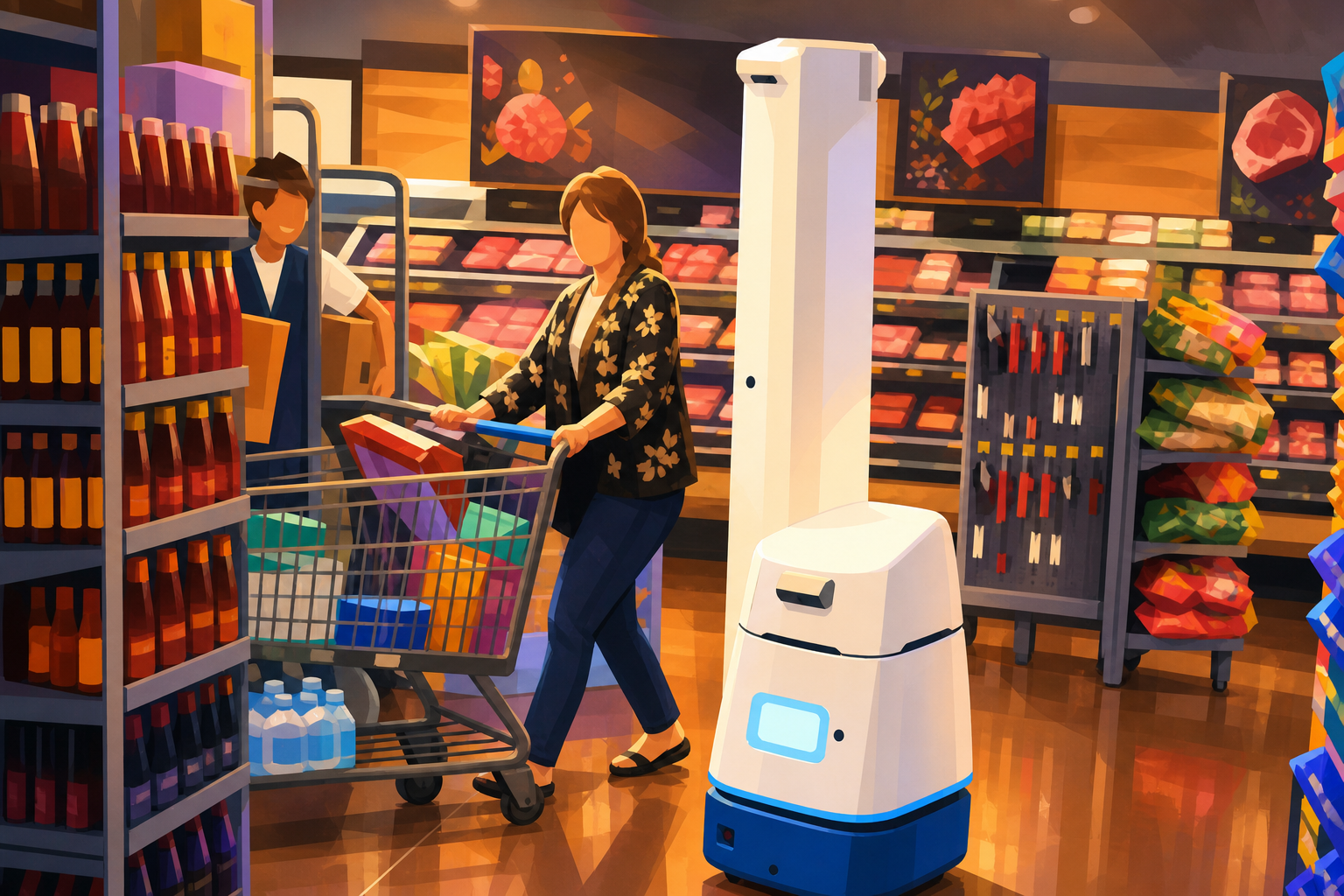
A few years ago, one of the world’s largest grocers piloted autonomous shelf-scanning robots across hundreds of stores. The program scaled quickly, with plans to expand even further. Then, after several years of testing, the grocer cancelled the program entirely.
The lesson was not that robots cannot solve the problem. The lesson was that scaling before fully understanding operational fit can create the appearance of success before the real questions have been answered.
This was not an isolated case. Another major grocery retail technology initiative attempted to remove friction from grocery checkout using cameras, sensors, and AI. After years of investment, the system struggled with the real-world complexity of grocery shopping: large baskets, fresh produce sold by weight, changing store layouts, substitutions, and unpredictable customer behavior. Human oversight was still required behind the scenes to help manage exceptions the system could not consistently resolve on its own.
These examples are not stories about bad technology. They are stories about pilots that did not fully answer the questions that mattered before broader rollout.
A properly designed pilot does more than prove that a robot can perform a task. It tests whether the solution fits the customer’s real operating environment. It measures the economics. It exposes exceptions. It identifies where humans are still needed. It clarifies what must be automated now, what can be handled remotely, and what should remain with store associates.
In other words, the goal of a pilot is not to produce a demo. The goal is to discover the truth early enough to adapt the solution before major capital, time, and organizational trust are put at risk.
With the right pilot design, these programs may not have failed in the same way. The customer could have discovered the operational limits earlier, adjusted the deployment model, narrowed the use case, redesigned the workflow, or built a better human-in-the-loop process before scaling.
That is the real value of a pilot.
A successful pilot should not simply ask:
Can the robot do the task?
It should ask:
Can this solution reduce cost, fit into existing operations, handle real-world exceptions, define the right role for humans, and scale without adding new complexity for the customer?
What a Blue Collar Robotics pilot actually measures
This is where we do things differently. A Blue Collar Robotics pilot isn’t a technology demo. It’s a business case built on your numbers, in your store, under your real operating conditions.
We measure three things, and each one connects directly to your profitability.
Picking Efficiency → Cost Savings
Picking is one of the largest variable costs in grocery fulfillment. Every second saved per pick compounds across thousands of orders per week. Our pilot measures picking rate with precision – items per hour, cost per pick, time per order, so you can see exactly what robotic picking means for your labor cost structure. This isn’t a theoretical projection. It’s measured performance in your environment, with your product mix, during your operating hours. When we present the results, the math is straightforward: here’s what picking costs you today, here’s what it costs with our system, and here’s what that difference means for your margin over 12 months.
Accuracy → Cost Reduction and Customer Satisfaction
Every mispick has a cost. There’s the direct cost of the wrong item – the return, the restock, the replacement. And there’s the indirect cost that’s harder to quantify but far more damaging: the customer who stops trusting your fulfillment and takes their orders somewhere else. Our pilot tracks order accuracy, substitution quality, and error rates at the item level. We don’t just tell you the system is accurate – we show you the data, benchmarked against your current operation, so you can calculate what improved accuracy is worth in reduced waste, fewer service recovery costs, and stronger customer retention.
Customer Experience → Real-World Acceptance
Here’s a question most robotics companies avoid: do your customers want robots in the store? It doesn’t matter how efficient or accurate the system is if shoppers find it intrusive, confusing, or off-putting. We don’t avoid this question. We answer it. During every pilot, our on-site project manager conducts structured interviews with shoppers to capture how they experience the robots in the aisle – what they notice, what concerns them, what surprises them, and whether the experience would affect their decision to shop there again. This data matters because customer acceptance is the single biggest variable that determines whether a pilot can scale. If the experience isn’t right, nothing else matters. We’d rather know that during the pilot than after a 200-store rollout.
Our pilot protocol: Built to eliminate risk
We designed our pilot process specifically to address the failure modes that kill most grocery retail technology initiatives. Every step exists because we’ve studied what goes wrong and built the process to prevent it.
Before the pilot starts, our project manager works directly with the buyer to establish the structure required for a successful pilot. This includes defining decision-makers, communication cadence, escalation paths, store-level responsibilities, reporting requirements, and the quantified performance metrics that will determine success. Both parties agree on what “good” looks like before a single robot enters the store.
The pilot plan also covers the adjacent processes that can determine success or failure, including IT integration, network access, order-flow alignment, associate awareness, safety procedures, customer interaction protocols, and operational handoffs between the robot, remote operator, and store team.
Before we go live, we run a pre-testing phase to gather baseline data, validate assumptions, and identify required adjustments. This allows us to confirm the robot, workflow, connectivity, store readiness, and exception-handling process before the formal pilot begins.
During the pilot, our project manager stays closely engaged, tracks performance in real time, and maintains clear communication with the customer’s project team. Picking rates. Accuracy. Cost per pick. Associate impact. Customer experience. IT reliability. Exception rates. Store disruption. Everything is documented, defensible, and tied to the operational and financial outcomes that determine whether the solution is ready to scale.
The bottom line
The grocery industry doesn’t need more pilots. It needs pilots that prove something.
Every metric we track connects to a number on your P&L. Picking efficiency is a labor cost question. Accuracy is a waste and retention question. Customer experience is a scalability question. When those three answers are clear – backed by data from your own operation – the path from pilot to deployment isn’t a leap of faith. It’s a business decision supported by evidence.
That’s what a Blue Collar Robotics pilot is designed to deliver: not a demonstration of what our technology can do, but measurable proof of what it will do for your bottom line.
Interested in seeing how our robots could improve your store’s picking operation? Connect with us through https://bluecollarrobotics.ai/get-in-touch/.