Most startups chase the “standard playbook”: move to the Bay Area, raise bigger rounds, hire fast, and optimize for growth metrics. Over time, that playbook has started to look less like entrepreneurship and more like a bureaucratic process, similar to what big corporations do when they launch a new internal project: lots of process, lots of overhead, and often a lot of capital spent before customers see real value. That’s not how we want to build. Whether people call us a startup or not, we’re building a business by keeping the only two things that matter at the center of every step: product and customers.
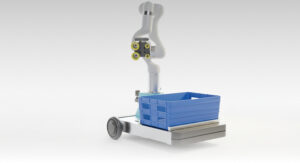
Blue Collar Robotics is creating real-world robotic labor, deployed inside operating grocery stores, where reliability, iteration speed, and customer trust matter more than hype. For this kind of company, Utah isn’t just a nice place to start, it’s an unfair advantage.
Utah consistently produces companies that are built to last. While the Bay Area will always lead in raw startup volume, Utah stands out when you look at outcomes per company. Research that’s been widely cited from Stanford GSB’s Ilya Strebulaev has highlighted Utah as a top performer in “unicorn conversion”, often framed as roughly one unicorn for every 61 VC-backed companies, which is meaningfully better than the national baseline. The point isn’t the headline number; it’s what it signals: Utah rewards capital-efficient execution and long-term company building, exactly what robotics requires.
Just as important, Utah has something that’s hard to measure but impossible to ignore: a true builder community. “Silicon Slopes” isn’t just a brand, it’s a real network centered around Lehi and the broader Wasatch Front where founders, operators, and investors actually help each other. When you’re deploying hardware into live environments, you don’t win through storytelling. You win through iteration, service, and trust. Utah’s culture is unusually supportive of that style of company building: practical introductions, fast feedback, and a shared belief that doing the work matters more than talking about it.
Utah is also a better match for robotics talent than most outsiders realize. The state has a growing engineering pipeline, including university programs connected to robotics and real-world systems development, and it benefits from proximity to aerospace and defense-grade engineering culture where validation and reliability aren’t optional. That combination, software speed plus hardware discipline, is exactly the mindset needed to turn robots into dependable labor.
And then there’s the retention advantage. Robotics is not a two-quarter sprint; it’s a multi-year build. Utah’s quality of life with mountains minutes away, outdoor access, strong communities, and family-friendly stability helps attract and keep the kind of people who want to build something real and stay long enough to perfect it. In hardware, continuity is a competitive advantage.
This is why Utah beats the Bay Area and Austin for our model. The Bay Area is unmatched for venture density, but it also creates pressure toward high burn, rapid scaling, and “full autonomy” expectations before a product is ready for real work. Austin is a strong tech hub, but Utah stands out as a place where execution culture, community support, and long-term building are deeply embedded. We’re not building Blue Collar Robotics to win a narrative. We’re building it to win deployments.
Finally, we believe Blue Collar Robotics can play a meaningful role in Utah’s next chapter. Utah doesn’t need another copy-and-paste SaaS company or yet another “AI agent” layer on top of yesterday’s software; it needs more companies that build durable, real-world systems that create jobs and measurable value in the physical economy. Utah can lead a new category in the physical economy: Robotic Labor-as-a-Service (RLaaS) – labor by the hour, delivered through robots. Building that category here can create a foundation for a new industry: robotics system development, field deployment and service jobs, hardware assembly networks, applied AI operations, and supplier partnerships that grow around real deployments. In other words, a scalable industry rooted in measurable value, not hype.
We chose Utah because it matches how we build: close to customers, close to builders, supported by a real community, and optimized for capital-efficient execution. We’re not chasing the startup game. We’re building a business the way we learned to build, by doing the work, earning trust, and delivering results.